baking · Recipe
Japanese Cheesecake (Soufflé Cheesecake)
From a video by Les Ateliers de Ludo · 11 min watch
A light, fluffy, soufflé-style Japanese cheesecake flavored with lemon zest. It has a delicate, moist, cloud-like texture that trembles when shaken and is much lighter than American-style cheesecake.
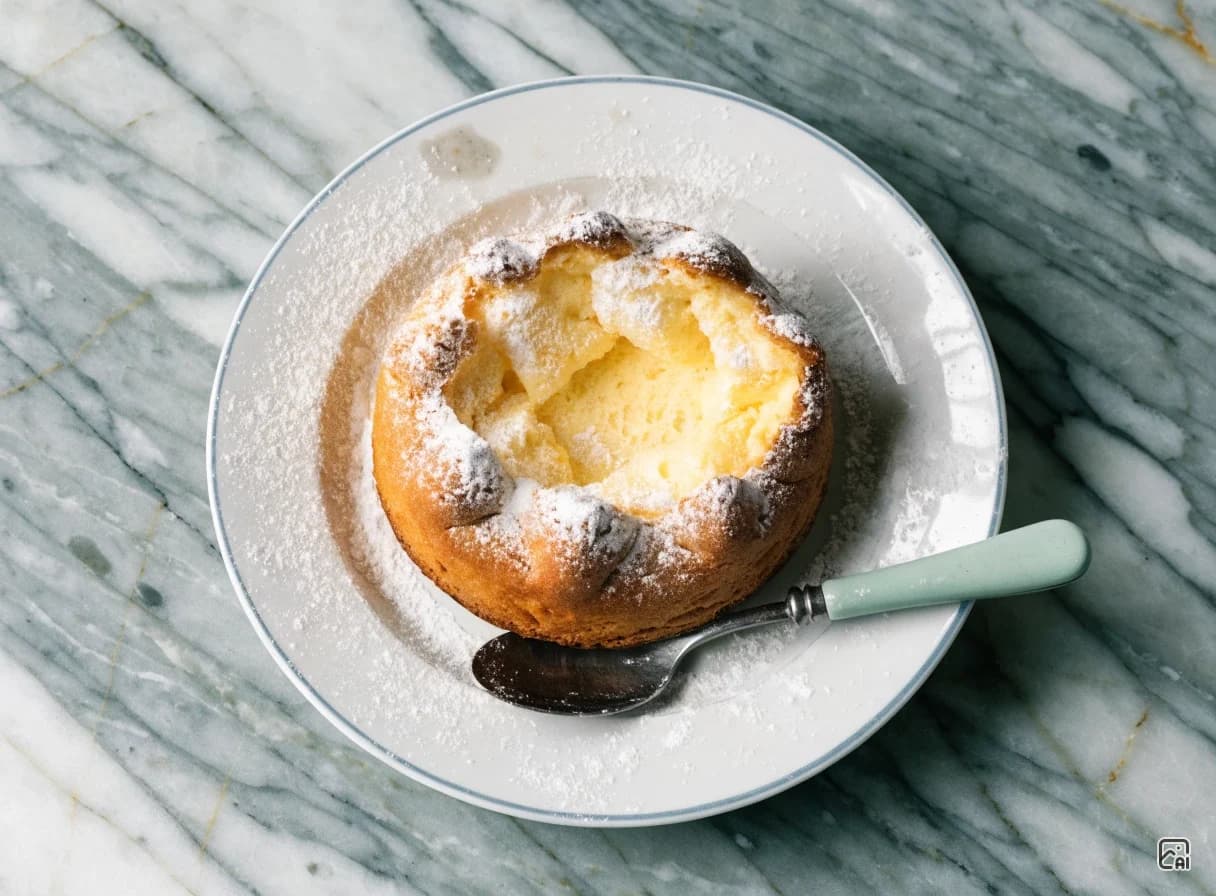
Source video — Les Ateliers de Ludo on YouTube
From the creator
Total time
~50 minutes+Estimated by Unreel from the recipe steps — the creator didn't state this.
Hands-on
~20 minutesEstimated by Unreel from the recipe steps — the creator didn't state this.
Servings
~10 servingsEstimated by Unreel from the complete recipe.
Difficulty
EasyEstimated by Unreel from the recipe steps — the creator didn't state this.
Extraction confidence: high
Auto-generated from the video and rewritten in our own words. Double-check quantities against the source before cooking.
Ingredients
Ingredients scaled to 10 servings
- 270 g cream cheese
- 90 g whole milk
- 90 g heavy cream
- 50 g butter
- 5 egg
- 35 g cake flour
- 50 g cornstarch
- 100 g sugar
- 1 lemon zest, zest of 1 bio lemon
- oil, to taste
Preparation
- Step 1Separate the whites from the yolks of 5 eggs. Place the 5 yolks in one bowl and the whites in another.
- Step 2In a saucepan combine the cream cheese, heavy cream, butter cut into pieces, whole milk, and the zest of 1 lemon. Heat gently over low heat while stirring constantly until the mixture reaches 50 °C (do not exceed). Remove from heat when it becomes smooth and fluid.
- Step 3When the mixture has cooled to lukewarm, add the 5 egg yolks all at once plus the sifted cake flour and cornstarch. Whisk until completely smooth and homogeneous (texture similar to a thin crème anglaise). Let cool to room temperature.
- Step 4Whip the 5 egg whites. When they start to foam, gradually add the sugar in three additions while continuing to whip until a soft, supple meringue forms (not too stiff).
- Step 5When the yolk mixture has reached room temperature, fold in about one-third of the meringue with a whisk to lighten it. Then pour this lightened mixture back into the remaining meringue and fold gently with a spatula until uniform, airy, and mousse-like. Avoid overmixing so the meringue does not deflate.
- Step 6Grease a 20 cm × 7 cm round aluminum cake pan with oil or melted butter. Line the bottom with a circle of parchment paper and the sides with a 7 cm high strip of parchment to facilitate unmolding.
- Step 7Pour the batter into the prepared pan. Tap the pan gently on the counter 3–4 times to burst large air bubbles and smooth the surface.
- Step 8Place the pan inside a larger rectangular baking dish. Put into a preheated static-heat oven. Bake at 180 °C for 15 min, then lower to 120 °C for 70 min, then raise back to 180 °C for 6–8 min to color the top. Turn the oven off and leave the cake inside for 20 min more with the door closed. Do not open the oven door during the process. The cake will rise like a soufflé.
- Step 9After cooling in the turned-off oven, remove the pan. Invert onto a plate, peel off the parchment, then invert again onto a serving plate. Let cool completely to room temperature before slicing.
Notes
- Can replace lemon zest with vanilla extract or seeds from one vanilla bean if preferred.
- Use a light aluminum pan 20 cm diameter × 7 cm high for best results.
- Cook in a water bath (bain-marie): fill the outer pan with water once the cake is in the oven to avoid spills.
- The cake will deflate slightly as it cools but should retain a fluffy, trembling texture when perfectly baked.