cooking · Recipe
Jali Dar Ghevar with Rabdi
From a video by Geeta's Cooking · 19 min watch
Traditional Rajasthani lattice ghevar made without a special mold using only 200 g maida and 4 tablespoons ghee. The batter is kept ice-cold and the oil very hot to achieve a perfect honeycomb structure. Served with quick bread-thickened rabdi made from 1 liter milk and a light one-string sugar syrup.
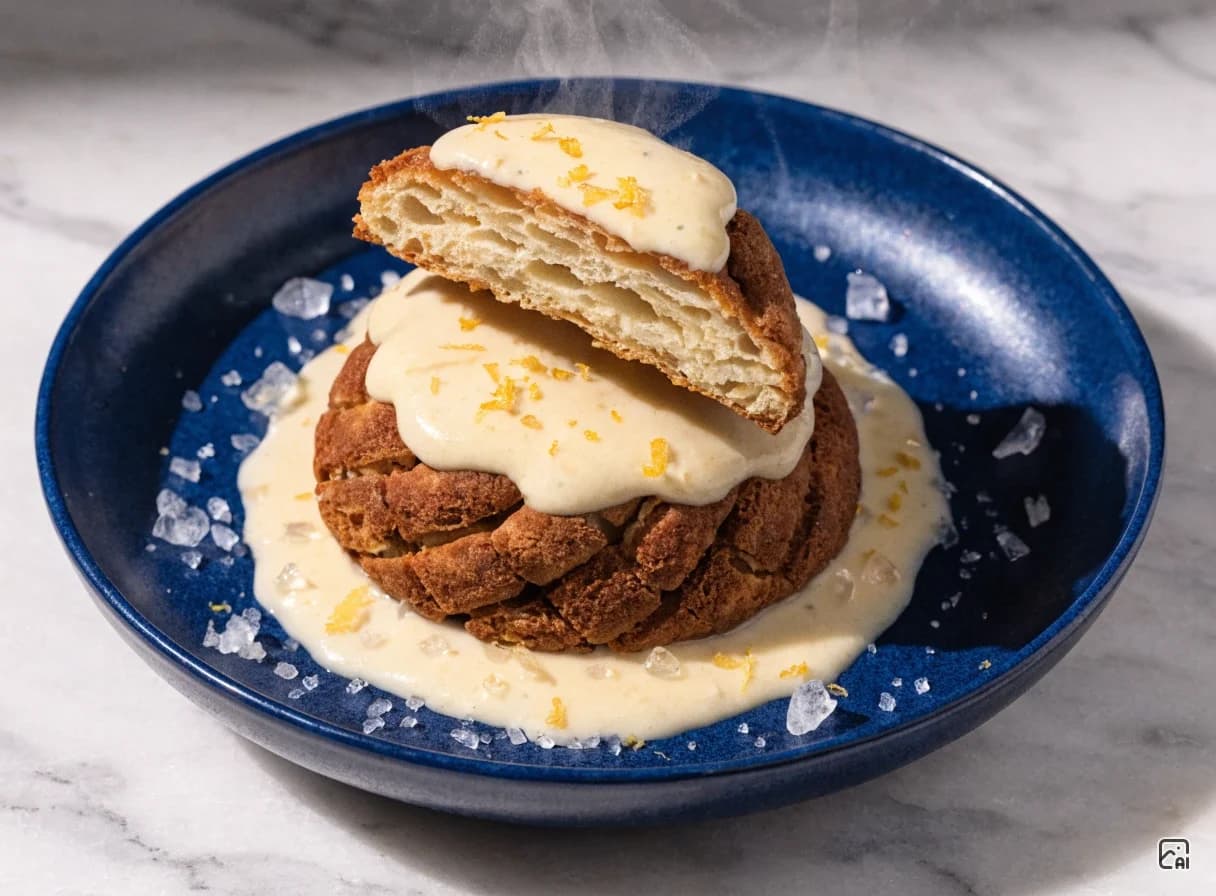
Source video — Geeta's Cooking on YouTube
From the creator
Total time
~1 hour 15 minutesEstimated by Unreel from the recipe steps — the creator didn't state this.
Hands-on
~40 minutesEstimated by Unreel from the recipe steps — the creator didn't state this.
Servings
~5 servingsEstimated by Unreel from the complete recipe.
Difficulty
HardEstimated by Unreel from the recipe steps — the creator didn't state this.
Extraction confidence: high
Auto-generated from the video and rewritten in our own words. Double-check quantities against the source before cooking.
Ingredients
Ingredients scaled to 5 servings
- 4 tablespoons ghee
- ice
- 200 g maida
- 1 cup milk
- 1 teaspoon wheat flour
- 1 teaspoon besan
- cold water
- 1 lemon, half
- oil
- 1 l milk
- 5 tablespoons sugar
- 15 saffron strands
- 3 slices bread, crusts removed, torn and coarsely crumbled
- 3 cardamom, crushed
- 1 cup sugar
- 1 cup cold water
- 2 cardamom, crushed
- saffron strands
- orange food color
- almonds
- pistachios
- rose petals
Preparation
- Step 1Place 4 tablespoons ghee in a bowl and beat vigorously by hand (or mixer) with crushed ice until it becomes pale, creamy and soft.
- Step 2Gradually add the 200 g maida, 1 cup cold milk, 1 tsp wheat flour, 1 tsp besan, cold water, and juice of half a lemon. Mix and beat thoroughly until smooth and lump-free like a thin kadhi batter. Strain if necessary.
- Step 3Keep the prepared batter bowl inside a larger bowl filled with cold water and ice to keep it chilled.
- Step 4Heat oil (or ghee) in a wide, deep vessel until very hot. The oil level should be about 1–1.5 inches deep. Keep the batter chilled and the oil very hot throughout frying.
- Step 5Pour the chilled batter very slowly in a thin stream into the exact center of the hot oil. Add in several small drops per spoonful, moving the spoon slightly to create a lattice while keeping the stream centered. Use a skewer or spoon handle to gently create space in the center and push the ghevar down so it fries evenly on all sides. Fry until golden and crisp, adjusting flame slightly lower if edges brown too fast. Carefully lift out and drain.
- Step 6Repeat to fry all the batter. 200 g maida yields 5 thick ghevar or 8–9 thinner ones. Keep the oil hot and batter cold between batches; add more ice if batter warms.
- Step 7For the rabdi, pour 1 liter milk into a kadai. Simmer on medium heat, stirring frequently, for 6–8 minutes until reduced and thickened.
- Step 8Add 5 tablespoons sugar, 15–20 saffron strands, a few drops of orange food color (optional), 3 coarsely crumbled slices of bread (crusts removed), and 3 crushed cardamom pods. Stir continuously until very thick. Turn off heat while still slightly loose as it will thicken further on cooling.
- Step 9For the sugar syrup, combine 1 cup sugar, 1 cup water, 2 crushed cardamom pods, a few saffron strands, and a few drops of orange food color. Boil while stirring until it reaches one-thread consistency.
- Step 10Place a warm ghevar on a plate. Drizzle with the warm sugar syrup, then spoon on a generous layer of cooled rabdi. Garnish with chopped almonds, pistachios, and rose petals.
Notes
- Keep batter ice-cold and oil very hot for best lattice formation.
- Add batter in many tiny drops rather than all at once; use a skewer to open the center while frying.
- Do not over-squeeze the lemon; only a few drops are needed.
- Rabdi thickens more as it cools, so remove from heat while still slightly loose.
- For thinner ghevar, use less batter per piece to yield 8–9 pieces instead of 5.
- Leftover frying oil can be reused for other cooking.